Tulsi (Holy Basil / Ocimum tenuiflorum): Complete Guide
Drive through almost any residential street in India and you’ll spot it — a small clay planter, often raised on a pedestal, sitting just outside the front door. That’s Tulsi. Before it was a supplement or a “superfood,” it was a plant families grew because it was considered sacred, not because a bottle told them to.
Table of Contents
ToggleOcimum tenuiflorum, still commonly labeled by its older name Ocimum sanctum, has occupied a strange dual role in Indian life for centuries — half medicine cabinet, half household shrine. Ayurveda calls it the “Queen of Herbs” and the “Elixir of Life,” which sounds like marketing until you realize the phrase predates marketing by roughly two thousand years. What’s newer is the research: a genuine and growing body of clinical trials looking at Tulsi’s role in stress, immune function, blood sugar, and more. This guide tries to walk through both threads honestly — what the tradition says, and what specific studies actually found, cited by name.
Quick Facts About Tulsi
|
Property |
Information |
|
Botanical Name |
Ocimum tenuiflorum L. (Synonym: Ocimum sanctum) |
|
Family |
Lamiaceae (mint family) |
|
Common Names |
Holy Basil, Sacred Basil, Tulsi |
|
Plant Type |
Aromatic perennial shrub (often grown as an annual in cooler climates) |
|
Native Region |
Indian subcontinent |
|
Parts Used |
Leaves, seeds, stems, flowers, roots |
|
Ayurvedic Classification |
Rasayana (rejuvenative herb) |
|
Primary Active Compounds |
Eugenol, ursolic acid, rosmarinic acid, apigenin, linalool |
|
Aroma |
Strong, sweet, clove-like |
|
Taste |
Slightly pungent, aromatic, mildly bitter |
What Is Tulsi, Exactly?
Tulsi belongs to the mint family — the same family as mint itself, rosemary, sage, lavender, and oregano — and if you’ve ever crushed a leaf between your fingers, the clove-like sharpness gives away the family resemblance immediately. It’s not the same plant as the sweet basil that goes into pesto; the aroma and chemical profile are noticeably different, even though the two are botanical cousins.
There are three varieties you’ll run into most often in Ayurvedic practice, and each has its own personality:
Rama Tulsi — bright green leaves, a milder aroma, the one most commonly grown in home gardens.
Krishna Tulsi — purple-green leaves, a noticeably stronger flavor, traditionally the most prized of the three in Ayurvedic formulations.
Vana Tulsi — the wild forest variety, highly aromatic, growing naturally across many tropical regions without cultivation.
All three show up in traditional herbal practice, and while their chemistry differs slightly, none is considered clearly “superior” — the choice often just comes down to what’s regionally available.
Where It Sits Botanically
|
Classification |
Details |
|
Kingdom |
Plantae |
|
Division |
Angiosperms |
|
Class |
Eudicots |
|
Order |
Lamiales |
|
Family |
Lamiaceae |
|
Genus |
Ocimum |
|
Species |
Ocimum tenuiflorum |
Names Around the World
|
Language |
Name |
|
Sanskrit |
Tulasi, Surasa |
|
English |
Holy Basil |
|
Hindi |
Tulsi |
|
Kannada |
ತುಳಸಿ (Tulasi) |
|
Tamil |
Thulasi |
|
Telugu |
Tulasi |
|
Malayalam |
Tulasi |
|
Marathi |
Tulsi |
|
Bengali |
Tuloshi |
|
Gujarati |
Tulsi |
Recognizing the Plant
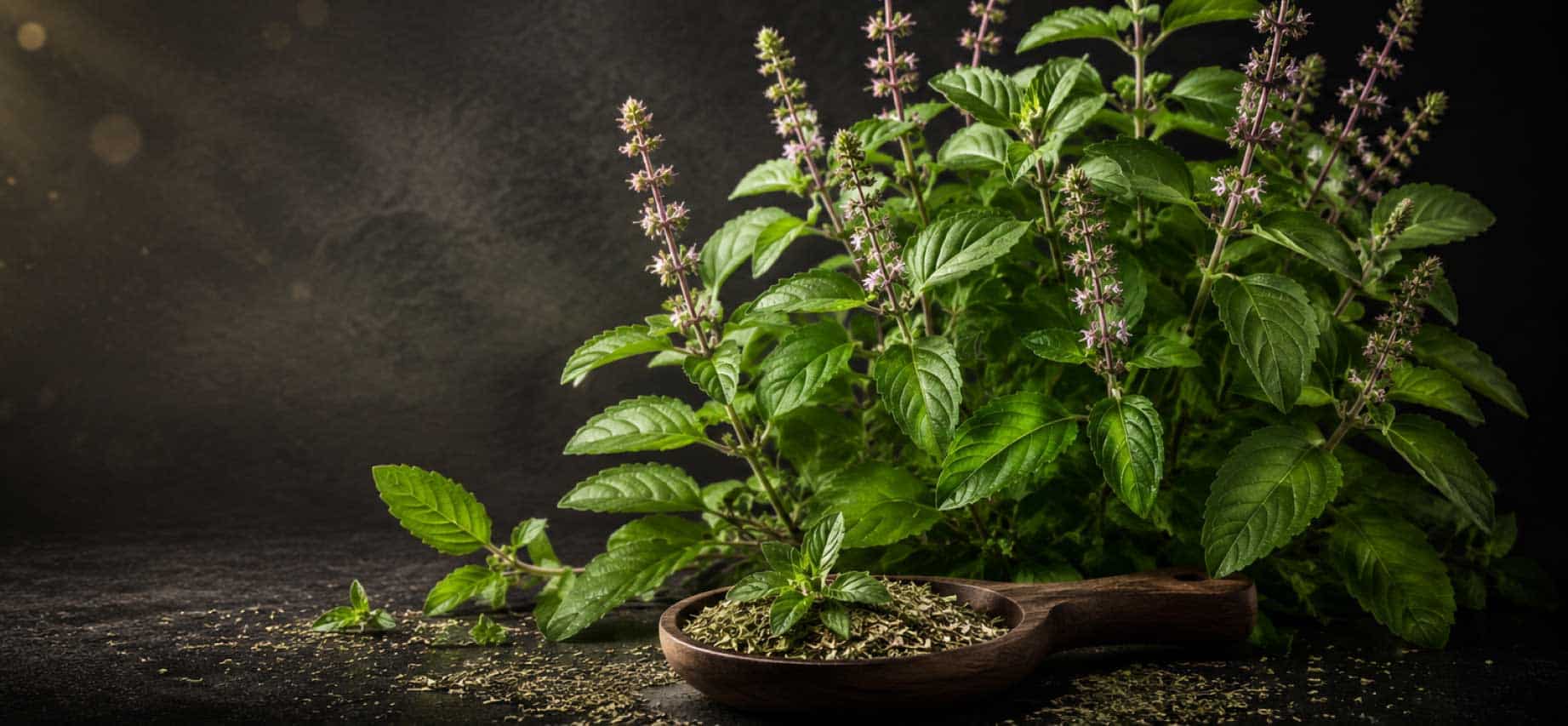
Growth habit. An upright, branching aromatic shrub, usually 30–90 cm tall.
Leaves. Oval, slightly hairy, with serrated edges — and unmistakably aromatic the moment you crush one.
Stems. Square in cross-section (a mint-family signature), green or purplish depending on the variety.
Flowers. Small, white to purple, arranged in spikes at the branch tips — bees and butterflies find them just as attractive as we find the leaves.
Seeds. Tiny and dark, and if you’ve ever soaked basil seeds for a drink, you already know the trick — they turn gelatinous in water almost instantly.
Nutrition and the Chemistry Behind the Reputation
Nobody eats Tulsi for its nutrient content — it’s used in small quantities, as tea or a few fresh leaves at a time, so its vitamin A, vitamin C, calcium, iron, potassium, magnesium, and fiber content, while real, isn’t nutritionally significant at the amounts typically consumed.
What actually matters is the plant’s phytochemistry.
Eugenol is Tulsi’s most abundant essential oil compound, and it’s responsible for a good part of that distinctive clove-like smell — clove itself is rich in eugenol too, which is why the aromas feel related.
Ursolic acid, a naturally occurring triterpenoid, continues to attract research interest for its antioxidant activity and other potential biological properties.
Rosmarinic acid — also found in rosemary and lemon balm, which tells you something about how these mint-family plants share a chemical toolkit — is a polyphenol studied primarily for antioxidant effects.
Apigenin, a flavonoid found across many medicinal plants, continues to be studied for its broader role in human health.
Linalool contributes to the pleasant floral note underneath the clove sharpness.
Flavonoids more broadly round out Tulsi’s antioxidant profile.
Tulsi in Ayurveda
|
Ayurvedic Property |
Description |
|
Rasa (Taste) |
Pungent (Katu), Bitter (Tikta) |
|
Guna (Qualities) |
Light (Laghu), Dry (Ruksha) |
|
Virya (Potency) |
Heating (Ushna) |
|
Vipaka (Post-digestive Effect) |
Pungent (Katu) |
|
Dosha Influence |
Traditionally considered balancing for Kapha and Vata when used appropriately; individual suitability depends on constitution and is best assessed by a qualified practitioner. |
As a Rasayana, Tulsi is traditionally understood as a herb for the whole system rather than one organ — classical texts describe it as supporting respiratory wellness, healthy digestion, immune function, stress resilience, skin health, oral hygiene, general vitality, seasonal wellness, and mental clarity. That’s a genuinely broad traditional footprint, built up over centuries of use rather than a single mechanism — and modern research has picked apart several of these threads individually, with results ranging from fairly solid to still quite early.
Why Tulsi Keeps Showing Up in Wellness Conversations
Tulsi occupies an interesting spot: it’s one of the few Ayurvedic herbs with both deep cultural roots and a genuinely active modern research pipeline. Investigators have looked at its role in stress response, immune function, respiratory health, antioxidant activity, metabolic wellness, oral health, and cardiovascular support. Some of that research holds up well; some of it is still preliminary. Worth keeping in mind before treating Tulsi as a fix-everything herb — the tradition is broad, but the clinical proof behind each individual claim varies quite a bit.
Health Benefits — What the Studies Actually Found (Part 2)
Below are Tulsi’s most researched and traditionally recognized benefits, with real published trials cited where they exist, followed by the areas where tradition is stronger than the current evidence.
Stress
This is Tulsi’s best-documented modern benefit, and there are a couple of real trials behind it worth naming directly. In a six-week, randomized, double-blind, placebo-controlled study, adults with general stress symptoms who took 1,200 mg/day of a standardized Ocimum tenuiflorum extract (marketed as OciBest) showed significant improvements in symptoms including forgetfulness, exhaustion, and sleep disturbance compared to placebo (Saxena et al., Evidence-Based Complementary and Alternative Medicine, 2012).
A more recent eight-week randomized, double-blind, placebo-controlled trial using a different standardized extract (Holixer, 250 mg/day) found improvements in perceived stress and sleep quality, along with changes in physiological stress markers, compared to placebo (Lopresti et al., Frontiers in Nutrition, 2022). Two separate extracts, two separate trials, similar direction of effect — which is a reasonably encouraging pattern, even though both were relatively short studies and used proprietary extracts rather than plain tea or powder.
Immune Function
Tulsi’s traditional use during seasonal changes has some real backing here. In a double-blind, randomized, controlled crossover trial, healthy volunteers given 300 mg of ethanolic Tulsi leaf extract on an empty stomach for four weeks showed statistically significant increases in interferon-gamma, interleukin-4, T-helper cell percentage, and natural killer cell activity compared to placebo (Mondal et al., Journal of Ethnopharmacology, 2011).
That’s a genuine immunomodulatory effect measured in blood markers — but it’s worth being precise about what it does and doesn’t show. Higher NK-cell activity and cytokine levels are markers of immune activity, not proof that Tulsi prevents or treats any specific infection. It’s supportive evidence, not a clinical claim about illness outcomes.
Blood Sugar
This is one of the older pieces of Tulsi research, and it’s a real crossover trial rather than an animal study. In a randomized, placebo-controlled, single-blind crossover trial in people with type 2 diabetes, treatment with holy basil leaves reduced fasting blood glucose by about 17.6% and postprandial blood glucose by about 7.3% compared to placebo (Agrawal, Rai & Singh, International Journal of Clinical Pharmacology and Therapeutics, 1996).
That’s a meaningful effect size for a dietary intervention — but it’s also nearly thirty years old, used raw leaves rather than a standardized extract, and had a fairly small sample. It shouldn’t be read as license to swap out diabetes medication for Tulsi tea; anyone on blood-sugar-lowering medication needs medical supervision if adding Tulsi, precisely because the effect appears to be real enough to require monitoring.
Respiratory Health
Tulsi has a long history in traditional preparations aimed at breathing comfort and throat relief. Researchers continue to explore its antioxidant and other biological properties in this context, but the modern clinical evidence here is thinner than for stress, immune function, or blood sugar — encouraging in early studies, not yet conclusive. It shouldn’t replace conventional treatment for any diagnosed respiratory condition.
Antioxidant Activity
Between eugenol, rosmarinic acid, apigenin, and its broader flavonoid content, Tulsi shows consistent antioxidant activity across laboratory and some human studies. This is genuinely one of the stronger, more consistently replicated findings in the Tulsi literature — though translating “measurable antioxidant activity” into a specific long-term health outcome is still an open scientific question, as it is for most antioxidant-rich plants.
Heart Health
Cardiovascular health depends on a whole cluster of factors — diet, movement, sleep, smoking status — and within that picture, researchers are exploring whether Tulsi’s antioxidant activity, mild anti-inflammatory effects, and possible influence on circulation and metabolic markers contribute anything meaningful. The signal is encouraging but still early; Tulsi isn’t a substitute for standard cardiovascular care.
Digestion, Brain Health, Oral Health, Skin Health, Liver Function, Metabolism, and Healthy Aging
These all show up regularly in Tulsi’s traditional use, and each has some early research behind it — Tulsi’s antioxidant compounds are being studied for digestive comfort, cognitive support, gum and oral tissue health, skin conditions, liver protection, and general metabolic and aging-related outcomes. Honestly, though, this is where the gap between tradition and proof is widest: most of what exists here is preliminary, small-scale, or still confined to lab and animal studies. Worth trying as part of a broader wellness routine, but not worth choosing Tulsi specifically to treat any of these.
Tulsi Tea as a Daily Ritual
A lot of Tulsi’s modern popularity has nothing to do with clinical trials at all — it’s just a genuinely pleasant, naturally caffeine-free tea that fits into a daily routine. Many people report feeling calmer or more settled after a cup, which may reflect the ritual itself as much as any specific compound; either way, it’s one of the lowest-risk, most accessible ways to bring the herb into everyday life.
How Strong Is the Evidence, Area by Area?
|
Health Area |
Current Evidence |
|
Stress Management |
★★★★☆ Moderate to Strong |
|
Antioxidant Activity |
★★★★★ Strong |
|
Immune Support |
★★★★☆ Moderate |
|
Blood Sugar Support |
★★★☆☆ Emerging |
|
Respiratory Health |
★★★☆☆ Emerging |
|
Heart Health |
★★★☆☆ Emerging |
|
Digestive Health |
★★★☆☆ Emerging |
|
Brain Health |
★★☆☆☆ Limited |
|
Skin Health |
★★☆☆☆ Limited |
|
Oral Health |
★★☆☆☆ Limited |
|
Liver Health |
★★☆☆☆ Limited |
|
Healthy Aging |
★★☆☆☆ Limited |
These ratings reflect where published human research currently stands and will shift as more studies are published.
How to Actually Use Tulsi (Part 3)
Common Uses
Tulsi is unusual among Ayurvedic herbs in that it’s genuinely woven into daily life rather than taken only when something’s wrong — herbal tea, culinary use, oral hygiene routines, skincare, aromatherapy, and religious practice all overlap here. It shows up for stress support, general wellness, respiratory comfort, and digestive support, but it’s just as often consumed simply because people enjoy it.
How Long Does It Take to Notice Anything?
Both trials cited above (Saxena et al. and Lopresti et al.) ran for six to eight weeks before measuring results, which lines up with the traditional Ayurvedic approach of regular, sustained use rather than expecting an immediate effect. How quickly you notice anything depends on dosage, product quality, your overall health, diet, and sleep — consistency tends to matter more than a large single dose.
Dosage
There’s no single dose that applies to everyone — it depends heavily on the preparation.
|
Form |
Typical Daily Amount |
|
Fresh Leaves |
4–10 leaves |
|
Dried Leaf Powder |
300 mg–2 g |
|
Tulsi Tea |
1–3 cups |
|
Standardized Extract |
Follow manufacturer’s instructions (clinical trials have used 250–1,200 mg/day) |
|
Capsules |
As directed on the label |
Worth noting: the trials cited above used specific standardized extracts at specific doses (OciBest at 1,200 mg/day; Holixer at 250 mg/day) — a cup of loose tea won’t deliver an equivalent dose, so don’t assume the two behave identically.
Timing
Tulsi doesn’t demand a strict schedule. Morning is popular alongside tea, breakfast, or a yoga and meditation routine; because it’s naturally caffeine-free, it also works fine in the afternoon or evening, unlike coffee or green tea.
Fresh Leaves, Dried Leaves, Powder, or Capsules?
Fresh leaves are the most traditional form — chewed directly, brewed into tea, blended into smoothies, or used as a garnish. If you’re growing your own plant, this is the most accessible way to use it.
Dried leaves preserve the herb for year-round use once fresh isn’t available, and get used for tea, powders, and capsules. Store them airtight, away from moisture and light.
Powder is convenient for mixing into warm water, tea, or smoothies, with a long shelf life and easy measuring.
Capsules solve the taste and preparation problem entirely — convenient, consistent dosing, easy to travel with. Look for products that clearly state Ocimum tenuiflorum, specify extract concentration, and have undergone third-party testing.
Ways to Prepare It
Basic Tulsi tea. Simmer 8–10 fresh leaves (or a teaspoon of dried leaves) in 250 ml water for 5–10 minutes, strain, and add ginger, cinnamon, cardamom, lemon, or a little honey once cooled slightly.
Tulsi-ginger tea. Fresh Tulsi leaves and fresh ginger simmered together — a popular choice during seasonal weather changes, with a bit of lemon if you like.
Herbal infusion. Tulsi steeped alongside lemongrass, mint, and cinnamon for a refreshing, fully caffeine-free drink.
Smoothie. Banana, spinach, fresh Tulsi leaves, apple, almond milk, and chia seeds, blended smooth — an easy way to work the leaves into a routine without brewing anything.
Traditional face pack. Tulsi powder mixed with yogurt and honey into a smooth paste, applied for 10–15 minutes and rinsed off. Patch-test first, as with any homemade skincare preparation.
Steam inhalation. A traditional home remedy — fresh leaves added to hot water for steam inhalation. It’s a long-standing practice, but the evidence supporting its effectiveness is genuinely limited, and it’s not appropriate for everyone; skip it if it feels uncomfortable or if you have a condition where steam inhalation isn’t advised.
Can You Take It Every Day?
As tea, fresh leaves, or a culinary herb — yes, and that’s exactly how it’s traditionally used across Indian households. Long-term use of concentrated extracts is a different question and worth discussing with a healthcare professional, especially if you’re managing a chronic condition or taking prescription medication.
Choosing a Quality Supplement
- Botanical identity — should state Ocimum tenuiflorum, possibly with the synonym Ocimum sanctum noted.
- Plant part — leaf-based products are the most common and traditional; check the label.
- Standardization — some products specify eugenol, ursolic acid, or rosmarinic acid content for batch consistency.
- Third-party testing — for heavy metals, pesticides, microbial contamination, identity, and purity.
- No vague proprietary blends — if quantities aren’t disclosed, you can’t judge your actual dose.
Storage
Keep Tulsi products in airtight containers, away from sunlight, in cool, dry conditions. Fresh leaves should go in the refrigerator if not used right away.
Quick Questions
Can I eat Tulsi leaves every day? Many people traditionally do. Whether it’s right for you depends on your health, medications, and personal circumstances.
Is Tulsi tea caffeine-free? Yes, entirely — one of the reasons it works as an any-time-of-day beverage.
Can Tulsi be combined with other herbs? It’s often included in traditional blends, but check with a healthcare provider first if you’re on medication or managing a chronic condition.
Fresh leaves or capsules — which is better? Neither, universally. Fresh is traditional and satisfying if you’re growing your own; capsules are more convenient and consistently dosed.
Can I cook with it? Yes, though its flavor is quite different from the sweet basil used in Italian cooking — don’t expect a 1:1 swap in a pesto recipe.
Side Effects, Safety, Pregnancy, and Drug Interactions (Part 4)
Tulsi has centuries of safe culinary and traditional use behind it, but — as with any herb — concentrated extracts deliver a different (and higher) dose of bioactive compounds than a cup of tea or a few fresh leaves, and deserve a bit more caution.
Is It Safe?
Fresh leaves, tea, and culinary use are generally well tolerated by most healthy adults. Concentrated extracts and supplements are a different matter — not unsafe by default, but worth more careful consideration given the higher and more consistent dose of active compounds involved.
Possible Side Effects
Most reported effects are mild.
Digestive discomfort — mild nausea, stomach upset, bloating, or diarrhea in some people. Taking it with food tends to help.
Allergic reactions — uncommon, but possible: skin rash, itching, swelling, or (rarely) difficulty breathing, which needs immediate medical attention.
Low blood sugar — given the Agrawal et al. (1996) findings above, Tulsi’s blood-sugar-lowering effect is real enough that people on diabetes medication should monitor glucose carefully if adding Tulsi supplements.
Low blood pressure — early research suggests mild blood-pressure-lowering effects; people on antihypertensive medication should check with their provider before using concentrated Tulsi products.
Who Should Be Cautious With Supplements
Culinary use and tea are fine for nearly everyone. Concentrated supplements deserve a conversation with a healthcare professional first if you:
- Are pregnant or breastfeeding
- Have diabetes
- Have a bleeding disorder
- Have low blood pressure
- Have upcoming surgery scheduled
- Take prescription medications
- Have a serious chronic illness
Pregnancy and Breastfeeding
Occasional culinary use is generally considered acceptable as part of a normal diet. Concentrated supplements are a different story — there isn’t enough high-quality clinical evidence to establish their safety during pregnancy, so most healthcare professionals recommend avoiding them unless specifically advised otherwise. The picture is similar during breastfeeding: small culinary amounts are common and unremarkable, but concentrated extract safety hasn’t been well studied, so medical guidance is the safer route.
Children
Fresh leaves and Tulsi tea are traditionally used in many households without particular concern. Concentrated supplements for children should only happen under a healthcare professional’s guidance.
Drug Interactions
Blood sugar medications — given Tulsi’s demonstrated glucose-lowering effect, combining it with diabetes medication may require closer monitoring.
Blood pressure medications — Tulsi may have mild blood-pressure-lowering effects; check with a provider before combining with antihypertensive drugs.
Blood thinners — some laboratory research suggests Tulsi may influence normal blood clotting; anyone on anticoagulants or antiplatelet medication should get medical advice first.
Thyroid medications — research here is limited, but people with thyroid disorders or on thyroid medication should still check with their provider before using Tulsi supplements.
Other prescription medications — because herbs can influence how the body absorbs or metabolizes certain drugs, anyone on long-term prescription medication should discuss Tulsi supplementation with their healthcare provider.
Surgery — because Tulsi may affect blood sugar and clotting, many healthcare professionals recommend stopping concentrated supplements one to two weeks before scheduled surgery, unless the surgical team advises otherwise.
Can Tulsi Affect Fertility?
Some animal studies have looked at this question, but human evidence is limited and current clinical evidence isn’t sufficient to draw firm conclusions either way. If you’re planning a pregnancy, it’s worth checking with a healthcare professional before using concentrated Tulsi supplements specifically.
Where the Broader Research Stands
Tulsi is one of the more extensively studied Ayurvedic herbs, with researchers investigating stress management, immune function, antioxidant activity, respiratory health, metabolic wellness, cardiovascular health, cognitive function, and oral and skin health. Most of the strongest clinical work — the studies cited throughout this guide — uses standardized extracts rather than fresh leaves or loose tea, which matters when comparing trial results to whatever product you’re actually using.
Where the evidence is strongest: stress management (Saxena et al., 2012; Lopresti et al., 2022), antioxidant activity, and immune support (Mondal et al., 2011) currently have the most direct clinical backing.
Where it’s still emerging: blood sugar regulation has real trial data (Agrawal et al., 1996) but is dated and needs replication with modern standardized extracts; heart health, brain function, healthy aging, respiratory wellness, skin health, oral health, and liver health remain genuinely promising but not yet firmly established areas.
Why Studies Are Hard to Compare Directly
Different trials use different Tulsi varieties, extraction methods, dosages, and study populations — plus small sample sizes and short follow-up periods are common limitations across this literature. A positive result in one trial, using one specific extract at one specific dose, doesn’t automatically apply to every Tulsi product sold commercially.
A Checklist for a Research-Backed Supplement
Look for products that clearly identify the botanical name (Ocimum tenuiflorum L.), specify whether whole leaf or standardized extract is used, state the amount per serving, undergo third-party testing, list all ingredients transparently, and avoid unnecessary proprietary blends.
Growing Tulsi, Harvesting, and Final Thoughts (Part 5)
Of all the medicinal herbs in this guide series, Tulsi is arguably the easiest to grow at home — it thrives in a garden bed, a terrace pot, or a balcony container with genuinely minimal fuss, and it grows from both seed and stem cuttings, which gives you more than one way in.
Growing Basics
Climate. Tulsi prefers warm tropical to subtropical conditions — 20°C–35°C, moderate humidity, moderate rainfall with good drainage, and 4–6 hours of direct sunlight daily. It’s sensitive to frost, so cooler climates should treat it as an annual or bring it indoors for winter.
Soil. Loose, fertile, well-drained soil — sandy loam or loamy soil rich in organic compost, with a pH between 6.0 and 7.5. Waterlogged soil invites root disease, so drainage matters more than fertility here.
Propagation from seed. Sow shallowly (about 0.5 cm deep) in well-drained potting mix, water gently, and keep in a warm, sunny spot. Germination typically takes 7–14 days.
Propagation from cuttings. Take a healthy 10–15 cm stem, strip the lower leaves, and place it in water or moist potting mix. Roots usually form within 2–3 weeks — a genuinely reliable shortcut if you already have access to a plant.
Watering. Keep soil evenly moist but never waterlogged — water when the topsoil starts to dry, ideally in the morning, and ease off during cool or rainy periods. Overwatering is the most common cause of poor plant health here, more so than underwatering.
Sunlight. Full morning sun with partial afternoon shade suits Tulsi well; indoor plants need a bright window and several hours of light daily.
Fertilizing. Organic options — compost, vermicompost, well-rotted farmyard manure, or organic liquid fertilizer — are all Tulsi really needs. Heavy chemical fertilizers aren’t necessary for a home garden.
Mulching. A layer of dry leaves, straw, coconut coir, or herbicide-free grass clippings helps retain moisture, suppress weeds, and moderate soil temperature.
Pruning. Pinch growing tips regularly to encourage bushier growth, remove flower spikes if leaf production is your priority, and trim damaged leaves. Regular harvesting genuinely makes the plant healthier and fuller, not weaker.
Pests and Diseases
Tulsi is fairly pest-resistant but can occasionally attract aphids, whiteflies, spider mites, or mealybugs — neem oil spray, insecticidal soap, a strong water spray, or introducing beneficial insects like ladybirds are all reasonable organic responses. Powdery mildew, leaf spot, and root rot are the main diseases to watch for; good air circulation, moderate watering, and healthy soil prevent most of them.
Harvesting
Leaves can usually be harvested once the plant reaches 20–30 cm tall. Pick in the morning after the dew has dried, harvest regularly to encourage new growth, avoid taking more than a third of the plant at once, and use clean scissors or shears.
Drying. Wash leaves gently, pat dry, and spread them in a shaded, well-ventilated area for several days — avoid direct sunlight, which fades both aroma and color.
Storage. Fresh leaves keep in the refrigerator, wrapped in a damp paper towel inside a breathable container, best used within a few days. Dried leaves belong in airtight glass jars, away from sunlight, in a cool, dry place — properly stored, they hold quality for 6–12 months. Powder should go in airtight containers, dry and away from heat and moisture.
Frequently Asked Questions
- What is Tulsi used for? Traditionally, stress resilience, respiratory wellness, digestion, immune function, and general well-being. Modern research — cited throughout this guide — has looked specifically at stress, immune markers, and blood sugar, with varying strength of evidence.
- Is Holy Basil the same as Tulsi? Yes — Holy Basil is simply the common English name for Tulsi (Ocimum tenuiflorum).
- Can I eat Tulsi leaves every day? Many people traditionally do; whether it’s right for you depends on your individual health and any medications you’re taking.
- Can Tulsi be grown indoors? Yes, given a bright spot with at least 4–6 hours of light daily.
- Which variety is best? Rama, Krishna, and Vana Tulsi each have slightly different characteristics, but all are valued traditionally — there’s no single “best” one.
- Is Tulsi tea caffeine-free? Yes, completely, which is part of why it works as an any-time beverage.
- Can Tulsi replace prescribed medicine? No — it’s a complementary herb, not a substitute for prescribed treatment. Never stop or adjust medication without talking to your healthcare provider.
- Is Tulsi safe during pregnancy? Small culinary amounts are generally considered acceptable; concentrated supplements need medical supervision given limited safety data.
- How long does a Tulsi plant live? In tropical climates, it behaves as a short-lived perennial; in cooler regions, it’s usually grown as an annual or brought indoors for winter.
- Does Tulsi attract pollinators? Yes — bees and butterflies are drawn to its flowers, making it a nice addition to a biodiversity-friendly garden.
Final Thoughts
Tulsi occupies a genuinely unusual place among medicinal herbs — equally at home in a temple courtyard and in a randomized clinical trial. The strongest current evidence backs its traditional reputation for stress management, with two separate modern trials (Saxena et al., 2012; Lopresti et al., 2022) using different standardized extracts and finding similar directions of benefit. Its immunomodulatory effects (Mondal et al., 2011) and blood-sugar-lowering activity (Agrawal et al., 1996) also have real trial support, even if some of that research is older and would benefit from modern replication. Respiratory health, heart health, cognition, skin, and oral health remain traditionally well-established but still short on the same depth of clinical proof.
None of that makes Tulsi a cure-all, and it’s not a substitute for medical care — particularly for anyone pregnant, managing diabetes or low blood pressure, or on prescription medication. Used thoughtfully, whether that’s a cup of tea in the evening, a plant on the balcony, or a well-sourced standardized supplement, Tulsi remains one of the more genuinely well-rounded herbs in the Ayurvedic tradition — one that has managed to stay relevant across a few thousand years of continuous, ordinary, everyday use.
References
- Saxena, R. C., Singh, R., Kumar, P., Negi, M. P. S., Saxena, V. S., Geetharani, P., Allan, J. J., & Venkateshwarlu, K. (2012). Efficacy of an extract of Ocimum tenuiflorum (OciBest) in the management of general stress: A double-blind, placebo-controlled study. Evidence-Based Complementary and Alternative Medicine, 2012, 894509.
- Lopresti, A. L., Smith, S. J., Metse, A. P., & Drummond, P. D. (2022). A randomized, double-blind, placebo-controlled trial investigating the effects of an Ocimum tenuiflorum (Holy Basil) extract (Holixer) on stress, mood, and sleep in adults experiencing stress. Frontiers in Nutrition, 9, 965130.
- Mondal, S., Varma, S., Bamola, V. D., Naik, S. N., Mirdha, B. R., Padhi, M. M., Mehta, N., & Mahapatra, S. C. (2011). Double-blinded randomized controlled trial for immunomodulatory effects of Tulsi (Ocimum sanctum) leaf extract on healthy volunteers. Journal of Ethnopharmacology, 136(3), 452–456.
- Agrawal, P., Rai, V., & Singh, R. B. (1996). Randomized placebo-controlled, single blind trial of holy basil leaves in patients with noninsulin-dependent diabetes mellitus. International Journal of Clinical Pharmacology and Therapeutics, 34(9), 406–409.
- Cohen, M. M. (2014). Tulsi — Ocimum sanctum: A herb for all reasons. Journal of Ayurveda and Integrative Medicine, 5(4), 251–259.
- National Center for Complementary and Integrative Health (NCCIH) — Herbs and Botanical Supplements.
- World Health Organization (WHO) — Traditional Medicine resources.
All studies above are real, published, peer-reviewed clinical trials, verified at the time this article was written — worth checking directly via PubMed or the journal listed if you’d like to read the full methodology.
Medical Disclaimer:
The information in this article is for educational purposes only and is not medical advice. Tulsi and other herbal supplements may not be suitable for everyone and can interact with certain medications or health conditions. Always consult a qualified healthcare professional before using herbal products, particularly if you are pregnant, breastfeeding, have a medical condition, or are taking prescription medications.