Turmeric (Curcuma longa): Benefits, Uses, Curcumin, Nutrition, Dosage, Side Effects & Complete Guide
Walk into almost any kitchen in India, and you’ll find a small tin or jar of bright orange-yellow powder tucked next to the salt and chilli. That’s turmeric — Curcuma longa to botanists, haldi to a few hundred million home cooks, and one of the most talked-about medicinal plants on the internet today.
Table of Contents
ToggleWhat’s interesting is that turmeric earned its reputation the slow way, long before anyone ran a clinical trial on it. Ayurvedic physicians have been reaching for it for over four thousand years, using it for everything from upset stomachs to wounds to skin complaints. It’s only in the last few decades that laboratory science has started catching up, picking apart the plant’s chemistry to understand why it seems to do what generations of cooks and healers already believed it did.
This guide tries to hold both of those threads at once — what Ayurveda has said about turmeric for centuries, and what modern research actually supports today, without blurring the two. Some of turmeric’s reputation holds up well under scientific scrutiny. Some of it is still an open question. We’ll try to be honest about which is which.
Quick Facts About Turmeric
|
Property |
Information |
|
Botanical Name |
Curcuma longa L. |
|
Family |
Zingiberaceae (ginger family) |
|
Common Names |
Turmeric, Indian Saffron, Golden Spice |
|
Plant Type |
Perennial herb |
|
Native Region |
Indian subcontinent and Southeast Asia |
|
Part Used |
Rhizome (underground stem) |
|
Main Active Compounds |
Curcuminoids — curcumin, demethoxycurcumin, bisdemethoxycurcumin |
|
Colour |
Bright yellow to orange |
|
Taste |
Warm, earthy, slightly bitter |
What Exactly Is Turmeric?
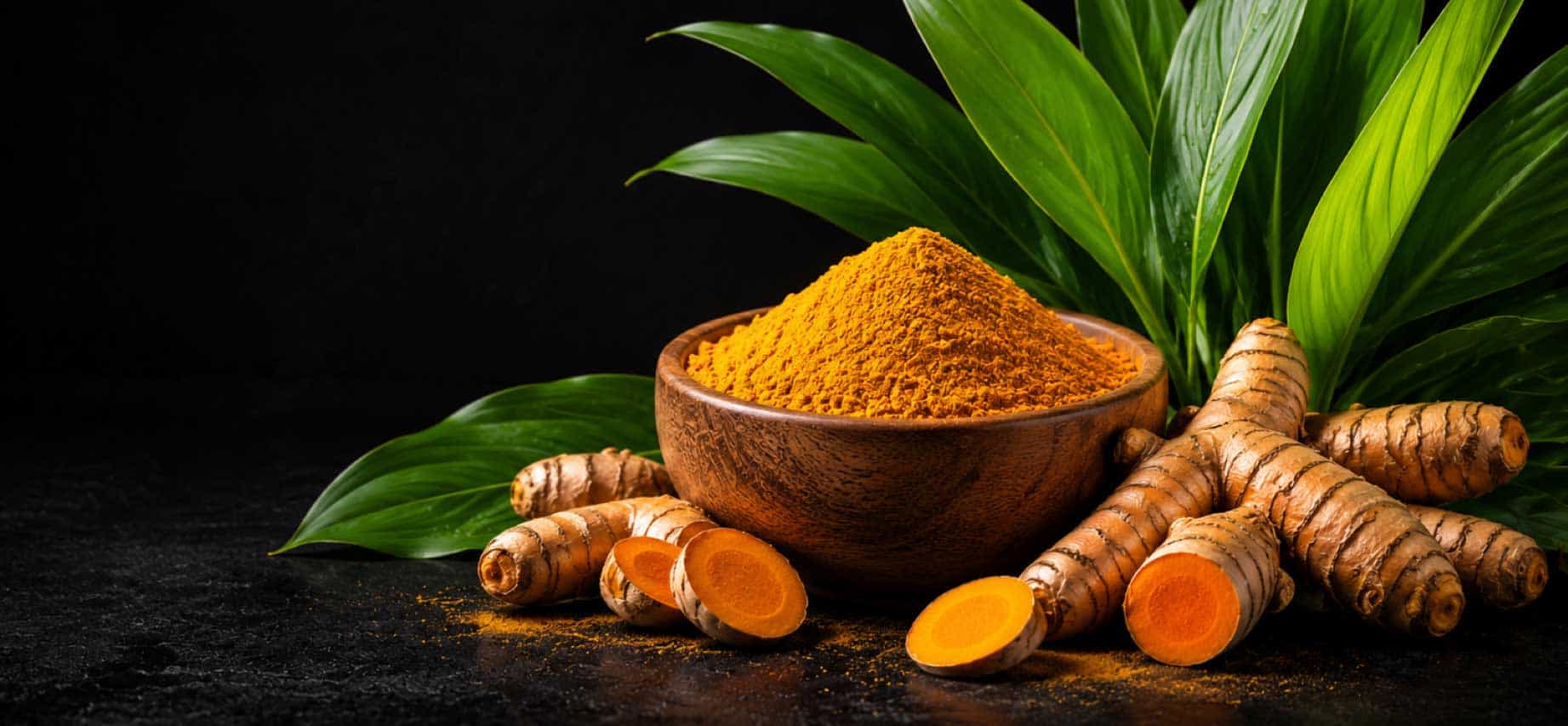
Turmeric is a flowering perennial herb, but almost nobody grows it for the flowers. The plant is cultivated for its rhizome — a thick, branching underground stem that looks a little like ginger, except when you slice it open, it’s a shock of deep orange rather than pale yellow. After harvest, the rhizomes are boiled, dried, and ground down into the powder that ends up in your spice rack.
It’s easy to think of turmeric as “just a spice,” but that undersells its place in Indian life. It shows up in wedding ceremonies, in skincare routines passed down through families, in home remedies for cuts and bruises, and of course in the kitchen. These days you’ll also find it sold as:
-
- Fresh rhizomes
- Dried powder
- Curcumin extracts
- Capsules and tablets
- Herbal teas
- Essential oil
- Topical creams and gels
Which form actually matters, because the concentration of active compounds — and therefore the effect you might feel — varies quite a bit between a pinch of kitchen turmeric and a standardised 500 mg curcumin capsule.
Where Turmeric Fits Botanically
|
Classification |
Details |
|
Kingdom |
Plantae |
|
Division |
Angiosperms |
|
Class |
Monocots |
|
Order |
Zingiberales |
|
Family |
Zingiberaceae |
|
Genus |
Curcuma |
|
Species |
Curcuma longa |
Turmeric belongs to the ginger family, which puts it in the company of a few other kitchen regulars: ginger itself (Zingiber officinale), cardamom (Elettaria cardamomum), and galangal (Alpinia galanga). Being related doesn’t mean they behave the same way, though — each of these plants has its own distinct chemistry and its own history of traditional use.
What People Call It, Depending on Where You’re From
Names for turmeric shift from region to region, which is a nice reminder of just how far this plant has travelled through everyday life:
|
Language |
Name |
|
Sanskrit |
Haridra, Nisha, Kanchani |
|
English |
Turmeric |
|
Hindi |
Haldi |
|
Kannada |
ಅರಿಶಿನ (Arishina) |
|
Tamil |
Manjal |
|
Telugu |
Pasupu |
|
Malayalam |
Manjal |
|
Marathi |
Halad |
|
Bengali |
Holud |
|
Gujarati |
Haldar |
How to Recognise the Plant
If you’re growing turmeric yourself or just curious what the living plant looks like (most of us only ever meet it as powder), here’s what to look for.
Growth habit. An upright perennial herb, typically reaching 60–100 cm — about two to three feet tall.
Leaves. Large, broad, lance-shaped, bright green, with a clear central vein running down the middle. They grow straight up from the rhizome.
Flowers. Pale yellow to white, clustered into cone-shaped spikes, often wrapped in green bracts that sometimes blush pink at the tips.
Rhizomes. Thick and branching, with that unmistakable bright orange-yellow flesh inside. Crack one open and the smell is warm, earthy, almost peppery — this is the part of the plant doing all the culinary and medicinal work.
Nutrition and the Compounds That Matter
Turmeric isn’t eaten in large enough quantities to be a major source of vitamins or minerals — you’re typically adding a teaspoon to a dish, not a cupful. That said, the rhizome does naturally contain small amounts of dietary fibre, carbohydrates, protein, potassium, iron, manganese, vitamin C (in the fresh form), and vitamin B6.
The real story, though, isn’t the nutrition label. It’s the plant chemistry.
Curcuminoids are the compounds researchers care most about. There are three: curcumin, demethoxycurcumin, and bisdemethoxycurcumin. Curcumin is the one you’ve probably heard of — it’s both the best-studied of the three and the compound responsible for turmeric’s colour.
Essential oils like turmerone, atlantone, and zingiberene give turmeric its aroma and are being studied in their own right for possible biological effects.
Antioxidant compounds in turmeric are of ongoing scientific interest for their role in neutralising oxidative stress at the cellular level — though it’s worth saying plainly that a compound behaving a certain way in a test tube doesn’t automatically mean it does the same thing once it’s inside a human body. That gap between lab results and real-world clinical outcomes is something we’ll come back to throughout this guide.
Turmeric in Ayurveda
Ayurvedic medicine doesn’t classify herbs the way a pharmacology textbook does — by molecule and mechanism. Instead, it describes them by taste, energetic quality, and effect on the body’s constitution (dosha).
|
Ayurvedic Property |
Description |
|
Rasa (Taste) |
Bitter (Tikta), Pungent (Katu) |
|
Guna (Qualities) |
Light (Laghu), Dry (Ruksha) |
|
Virya (Potency) |
Heating (Ushna) |
|
Vipaka (Post-digestive effect) |
Pungent (Katu) |
|
Dosha Influence |
Traditionally considered balancing for Kapha, and supportive for Vata when used appropriately. Individual suitability varies and is best assessed by a qualified Ayurvedic practitioner. |
Classical Ayurvedic texts describe turmeric as a genuinely versatile herb — one that shows up across formulations aimed at digestion, skin health, wound care, joint comfort, respiratory wellness, women’s health, liver function, oral hygiene, and general vitality. That’s a long list, and it reflects centuries of accumulated practice rather than a single mechanism of action. Modern research is now working through these traditional claims one at a time, and — as you’ll see below — the evidence is stronger in some areas than others.
Why Everyone’s Suddenly Talking About Turmeric
Turmeric’s current popularity isn’t really “sudden” so much as the result of two long threads finally meeting: centuries of traditional use on one side, and a growing pile of scientific papers on the other. Researchers have poked at turmeric and curcumin from nearly every angle — inflammatory response, antioxidant activity, joint health, digestion, skin, heart health, brain health, metabolism.
The findings are genuinely encouraging in places. But “encouraging” isn’t the same as “settled.” Results across studies aren’t always consistent, curcumin is famously hard for the body to absorb on its own, and formulations vary widely from one supplement to the next. All of which is to say: turmeric deserves its reputation, but it also deserves a clear-eyed look at where the science still has gaps.
Health Benefits — What Tradition Says, and What Research Actually Shows (Part 2)
Turmeric may be one of the most heavily researched medicinal plants on Earth, and most of that research circles back to curcumin. But the rhizome also contains other curcuminoids and essential oils that likely contribute to its overall effect — curcumin just happens to be the one scientists have studied most closely.
A quick note before we go further: laboratory and animal studies have produced plenty of promising signals, but human research is a mixed bag — some areas are backed by solid clinical trials, others rest mostly on preliminary or small-scale studies. Below, each benefit is broken into what Ayurveda has traditionally claimed and what the current research base actually supports.
Inflammation and the Body’s Recovery Response
Inflammation isn’t inherently bad — it’s the body’s normal defence mechanism against injury and infection. The trouble starts when it lingers longer than it should, which is where turmeric’s reputation as an anti-inflammatory herb comes in.
Ayurvedic tradition has long used turmeric to support joint comfort, muscle recovery, and wound healing. On the research side, curcumin has been shown in multiple clinical trials to influence several inflammatory pathways, and a number of studies suggest it may help with joint comfort and mobility in some people. The catch is that results shift depending on the formulation and dose used — not every “turmeric supplement” on a shelf is equally potent.
An Antioxidant Ally Against Everyday Wear and Tear
Every day, your cells deal with oxidative stress — damage caused by unstable molecules called free radicals, driven along by things like pollution, UV exposure, smoking, and simply getting older. Turmeric contains naturally occurring antioxidant compounds shown, in laboratory studies, to help neutralise some of these free radicals.
Whether that lab-bench effect translates into a noticeable long-term health benefit for someone eating turmeric regularly is still being worked out — but antioxidant activity is consistently one of the better-supported areas in turmeric research, alongside its anti-inflammatory effects.
Joint Comfort
Aching joints are probably the single most common reason people reach for a turmeric supplement in the first place, and Ayurvedic medicine has incorporated the herb into joint-support preparations for a very long time.
The modern evidence here is reasonably encouraging: several studies, particularly in adults with osteoarthritis, have found that certain curcumin formulations may help with joint comfort, physical function, and mobility. Researchers are still working out the ideal dosage and how long the benefits last, but of all turmeric’s proposed uses, this is one of the more solidly backed.
Digestion
Turmeric has a long history as a digestive aid in Ayurveda — stirred into meals not just for flavour but to support digestive comfort. Modern research is exploring how turmeric affects digestive function and gut health, and while early findings look promising, the evidence is still mixed. It’s not a substitute for medical treatment if you’re dealing with a genuine digestive disorder.
Liver Function
The liver does a lot of quiet, unglamorous work — metabolism, detoxification, nutrient processing — and Ayurvedic formulations have historically included turmeric to support it. Scientists are looking into whether turmeric’s antioxidant properties play a role here too, but human evidence remains limited. Turmeric shouldn’t be treated as a treatment for liver disease.
Heart Health
Cardiovascular health is shaped by a whole cluster of lifestyle factors — diet, activity, sleep, whether or not you smoke. Within that picture, researchers are exploring whether curcumin might support healthy inflammatory responses, antioxidant activity, and normal blood vessel function. The findings so far are promising rather than conclusive; there isn’t enough evidence yet to call turmeric a primary treatment for heart disease.
Brain Health
Curiosity about turmeric and cognition has grown quickly — studies have looked at possible effects on memory, learning, attention, and general cognitive performance. Most of this is still preliminary, and it will take larger, longer human studies before anyone can say something definitive.
Immune Function
A well-functioning immune system depends on the basics: nutrition, sleep, movement, stress management. Turmeric contains compounds being studied for their effect on normal immune function, and current evidence suggests it may offer some support as part of an overall healthy lifestyle. It’s not a treatment or prevention strategy for infections, though.
Skin
Turmeric’s role in skincare goes back generations — face masks, cosmetic preparations, even certain wedding rituals rely on it. Modern research continues to look at whether its antioxidant and anti-inflammatory properties help maintain healthy skin. One practical note: turmeric’s intense pigment can temporarily stain skin, so topical use isn’t for everyone, and a patch test is a sensible first step.
Blood Sugar and Metabolism
Some early studies suggest curcumin may influence glucose metabolism and other aspects of metabolic health — lipid levels, oxidative stress, inflammatory pathways. But the evidence here is genuinely limited and inconsistent, and larger clinical trials are still needed. If you’re managing diabetes with medication, this is an area where you should talk to your doctor before adding turmeric supplements, since interactions with blood-sugar-lowering drugs are possible.
Weight Management
Turmeric occasionally gets marketed as a weight-loss aid, but current evidence doesn’t support it as a standalone solution for that. At best, it might complement a lifestyle that already includes balanced nutrition, regular exercise, decent sleep, and stress management — the same things that actually move the needle on weight regardless of turmeric.
Respiratory and Oral Health
Classical Ayurvedic texts describe turmeric as supportive of respiratory comfort and, in some traditions, oral hygiene. Both areas are still emerging in the scientific literature, with more research needed before firm recommendations can be made. Turmeric isn’t a substitute for conventional treatment of respiratory disease.
The Bigger Picture
What stands out about turmeric, more than any single benefit, is its sheer versatility. Traditional use spans digestion, joints, skin, vitality, and healthy ageing — not because turmeric is a miracle cure, but because Ayurvedic practice has always approached herbs holistically rather than targeting one organ system at a time. That breadth is part of why the plant has held onto its popularity for so long, even as modern science works through the evidence one benefit at a time.
The Absorption Problem: Why Bioavailability Matters
Here’s the frustrating part: curcumin, for all its promising research, is absorbed quite poorly by the human body on its own. This is arguably the single biggest limitation in turning turmeric’s lab results into real-world benefits.
To get around this, many commercial supplements pair curcumin with:
- Black pepper extract (Piper nigrum), which contains piperine
- Phospholipid complexes
- Liposomal formulations
- Micellar delivery technologies
These combinations can meaningfully increase how much curcumin actually makes it into your bloodstream compared to plain turmeric powder — which is part of why a lot of clinical trials use these enhanced formulations rather than kitchen-variety turmeric.
So, How Strong Is the Evidence, Really?
It helps to see the research landscape side by side rather than benefit by benefit:
|
Health Area |
Current Evidence |
|
Healthy Inflammatory Response |
★★★★★ Strong |
|
Antioxidant Activity |
★★★★★ Strong |
|
Joint Health |
★★★★☆ Moderate to Strong |
|
Digestive Health |
★★★☆☆ Emerging |
|
Heart Health |
★★★☆☆ Emerging |
|
Brain Health |
★★★☆☆ Emerging |
|
Skin Health |
★★★☆☆ Emerging |
|
Immune Support |
★★★☆☆ Emerging |
|
Liver Health |
★★☆☆☆ Limited |
|
Blood Sugar Support |
★★☆☆☆ Limited |
|
Weight Management |
★★☆☆☆ Limited |
|
Oral Health |
★★☆☆☆ Limited |
These ratings reflect where the published human research currently stands and will likely shift as more high-quality studies come out.
How to Actually Take Turmeric (Part 3)
Once you’ve read through the traditional uses and the research, the practical question is usually simpler than any of it: how do you actually take the stuff?
The honest answer is “it depends” — on your goals, whether you’re using turmeric as a cooking spice or reaching for a concentrated supplement, and how much curcumin the product actually contains. Culinary turmeric and standardised curcumin extracts are really two different things wearing the same name, with quite different levels of bioavailability.
Everyday Uses
Turmeric shows up across a wide range of everyday applications: cooking, teas, golden milk, skin care, natural food colouring, and general wellness routines. In Indian cuisine specifically, it’s valued as much for its flavour and colour as for any health benefit — it’s simply part of how the food is built.
Fresh Turmeric vs. Turmeric Powder
Both come from the same rhizome, but they behave quite differently in the kitchen.
Feature |
Fresh Turmeric |
Turmeric Powder |
|
Source |
Fresh rhizome |
Dried and ground rhizome |
|
Flavour |
Mild, earthy, slightly peppery |
Stronger, more concentrated |
|
Colour |
Bright orange-yellow |
Deep golden-yellow |
|
Shelf Life |
Short (needs refrigeration) |
Long, if stored airtight |
|
Typical Uses |
Juices, smoothies, curries |
Cooking, teas, supplements |
Neither is objectively “better” — fresh turmeric brings a brighter, more delicate flavour and natural oils, while the powder is what most people reach for simply because it keeps longer and is easier to measure.
Dosage: There’s No Single Right Number
Anyone promising you a universal turmeric dose is oversimplifying. The right amount depends on the form you’re using, how concentrated the curcumin is, the quality of the product, your own health status, and ideally, a conversation with a healthcare professional if you’re unsure.
As a general reference point for healthy adults:
|
Form |
Typical Daily Amount |
|
Turmeric Powder |
1–3 grams |
|
Fresh Turmeric |
3–10 grams |
|
Standardised Curcumin Extract |
500–1,000 mg (follow the product’s own directions) |
|
Turmeric Tea |
1–2 cups daily |
Worth noting: most clinical studies that produced positive results used standardised curcumin extracts, not the loose turmeric powder from a kitchen jar — so don’t assume the two will behave identically at similar-sounding doses.
Timing: Morning, With Food, or Whenever?
Turmeric doesn’t demand a strict schedule. Some people take it in the morning as part of a daily wellness routine — stirred into a smoothie or breakfast dish. Others prefer taking it with meals, since curcumin is fat-soluble and tends to absorb better alongside dietary fat — think olive oil, coconut oil, ghee, nuts, seeds, or avocado.
Why Black Pepper Keeps Showing Up in Turmeric Products
If you’ve noticed how often turmeric supplements list black pepper or “piperine” on the label, there’s a reason. Curcumin’s natural bioavailability is low, and piperine — the compound responsible for black pepper’s bite — has been shown to boost curcumin absorption in certain formulations. That’s why so many commercial products pair the two.
One caveat worth taking seriously: piperine can also affect how the body absorbs certain medications. If you’re on prescription drugs, it’s worth checking with your doctor before combining them with a piperine-boosted turmeric supplement.
Choosing Between Turmeric Powder, Fresh Turmeric, and Curcumin Extracts
Turmeric powder is the form most of the world actually uses. It’s affordable, shelf-stable, and fits naturally into cooking — the trade-off is a lower curcumin concentration and the same absorption limitations as any culinary spice.
Fresh turmeric looks like a smaller, more orange cousin of ginger. It brings a brighter flavour and natural volatile oils that get lost in drying, and it’s a nice addition to juices and smoothies — but it doesn’t keep long, and it will happily stain your cutting board (and your fingers) a deep yellow.
Curcumin supplements aim to deliver a much higher concentration of curcuminoids than you’d ever get from cooking, often paired with an absorption-enhancing ingredient. Not all of them are made equally, though — it’s worth checking the label for standardised curcuminoid content and third-party testing rather than trusting the packaging alone.
Turmeric in the Kitchen: A Few Ways to Use It
Turmeric tea. Simmer a teaspoon of turmeric powder (or grated fresh turmeric) in about 250 ml of water for 10–15 minutes. Strain if you used fresh turmeric, then add whatever you like — ginger, cinnamon, black pepper, lemon, or a little honey once it’s cooled slightly.
Golden milk. Probably Ayurveda’s best-known turmeric drink. Gently heat a cup of milk (dairy or plant-based) with half a teaspoon of turmeric, a pinch each of black pepper and cinnamon, and a little grated ginger if you like. Simmer for about five minutes, then sweeten with honey or jaggery once it’s cooled a bit. It’s traditionally sipped in the evening, as a wind-down drink.
Turmeric smoothie. Blend banana, mango, fresh or powdered turmeric, yogurt (dairy or plant-based), almond milk, and chia seeds. An easy way to fold turmeric into breakfast without thinking about it too hard.
Turmeric rice. Cook basmati rice with turmeric powder, cumin seeds, onion, garlic, and a little olive oil or ghee for a fragrant, golden side dish.
Turmeric lentil soup. Turmeric pairs naturally with lentils, carrots, tomatoes, garlic, ginger, spinach, and black pepper — a simple, nourishing everyday meal.
Turmeric face mask. Mix turmeric powder with plain yogurt and honey into a smooth paste, apply for 10–15 minutes, then rinse. A patch test first is a good idea — turmeric can temporarily stain skin, and reactions vary from person to person.
Can You Take Turmeric Every Day?
As a culinary spice, yes — people across the world do this without issue. Whether a concentrated turmeric or curcumin supplement is appropriate for long-term daily use is a different question, and depends on your overall health, any medications you’re taking, the specific product, and ideally a healthcare professional’s input.
What to Look for in a Quality Turmeric Supplement
Not every product on the shelf delivers what its label implies. A few things worth checking:
- Botanical identity — the label should clearly state Curcuma longa
- Standardised curcuminoids — reputable products disclose the actual percentage or amount of curcuminoids per serving.
- Bioavailability enhancers — piperine, phospholipid complexes, micellar or liposomal technology.
- Third-party testing — for heavy metals, pesticides, microbial contamination, identity, and purity.
- No vague proprietary blends — if a label won’t tell you how much turmeric or curcumin is actually in the product, it’s hard to judge the dose you’re getting.
Storage Tips
Keep turmeric products in airtight containers, away from moisture, heat, and direct sunlight. Fresh rhizomes should go in the refrigerator and get used within a few weeks — they don’t keep the way the dried powder does.
A Few Quick Questions People Ask
Can I eat raw turmeric? Yes, in moderation — it’s a common addition to juices, salads, and smoothies, with a stronger, earthier flavour than the powder.
Is fresh turmeric better than powder? Not really “better,” just different — fresh brings flavour and natural oils, powder brings convenience and shelf life.
Can I take turmeric with black pepper? Yes, and it’s a common pairing precisely because piperine helps absorption — just check with your doctor first if you’re on prescription medication.
Does cooking destroy curcumin? Cooking may reduce curcumin content somewhat over time, but turmeric still holds onto much of its flavour and colour at normal cooking temperatures.
Side Effects, Safety, Pregnancy, and Drug Interactions (Part 4)
Turmeric’s long history as a food doesn’t automatically make every form of it risk-free at every dose. Culinary amounts are one thing; concentrated curcumin supplements at higher doses over long periods are another, and it’s worth treating them differently.
Is Turmeric Actually Safe?
For most healthy adults, yes — culinary turmeric has centuries of safe use behind it, and standardised curcumin supplements also appear generally well tolerated when used sensibly. But “generally safe” always comes with caveats: dosage, how long you use it, the quality of the product, your existing health conditions, and any medications you’re already taking all factor in. Natural doesn’t mean risk-free, especially once you move from a pinch in your curry to a concentrated capsule.
Possible Side Effects
Most reported issues are mild and tend to show up at higher doses or with prolonged supplementation.
Digestive effects — stomach upset, nausea, bloating, acid reflux, or diarrhoea in some people. Taking turmeric alongside food can help.
Headaches — a small number of people report mild headaches, especially when first starting curcumin supplements.
Skin reactions — topical turmeric can occasionally cause irritation, redness, or contact dermatitis. A patch test before using any homemade or store-bought turmeric skincare product is a sensible habit.
Yellow staining — both fresh and powdered turmeric will stain skin, clothing, and kitchen surfaces. Harmless, but occasionally annoying to clean up.
Who Should Be Cautious With Turmeric Supplements
Cooking with turmeric is fine for nearly everyone, but concentrated supplements deserve a conversation with a healthcare professional first if you:
- Are pregnant or breastfeeding
- Have gallbladder disease
- Have kidney stones, or a history of them
- Have a bleeding disorder
- Have iron deficiency
- Have liver disease
- Have upcoming surgery scheduled
- Take prescription medications
Pregnancy and Breastfeeding
Using turmeric as a cooking spice, in normal food amounts, is generally considered fine during pregnancy. High-dose supplements are a different matter — there isn’t enough high-quality evidence to establish their safety here, so it’s best to avoid them unless a healthcare provider specifically advises otherwise.
The picture is similar for breastfeeding: culinary use is common and unremarkable, but research on concentrated supplementation during this period is still limited, so medical advice is the safer route.
Turmeric and Children
Turmeric appears in family meals across many cultures without any particular concern. Concentrated supplements for children, though, should only happen under a healthcare professional’s guidance.
Drug Interactions Worth Knowing About
Blood thinners. Curcumin may affect normal blood clotting, so anyone on anticoagulants or antiplatelet medications should check with their doctor before adding turmeric supplements.
Diabetes medications. Turmeric may influence blood sugar regulation — worth monitoring closely if you’re already on medication for this.
Blood pressure medications. Turmeric may affect blood pressure in some people, so it’s worth discussing with your provider before combining the two.
Iron supplements. Turmeric, in large amounts, may reduce iron absorption — relevant if you’re managing iron deficiency.
Chemotherapy and other prescription medicines. Anyone undergoing cancer treatment, or on other prescription medications generally, should loop in their treating physician before adding turmeric supplements — interactions are possible depending on the specific drug involved.
Gallbladder disease. Turmeric stimulates bile production, which is part of why it’s traditionally used for digestion — but that same effect means people with gallstones, bile duct obstruction, or active gallbladder disease should get medical advice first.
Kidney stones. Turmeric naturally contains oxalates, which can contribute to stone formation in people who are already prone to them. If you have a history of calcium oxalate stones, this is worth discussing with a healthcare provider.
Upcoming surgery. Because turmeric may affect blood clotting, many healthcare professionals recommend stopping high-dose supplements one to two weeks before a planned surgery, unless your surgical team advises otherwise.
What About the Liver?
Turmeric as a dietary spice has a long, safe track record. That said, there have been rare reports of liver injury associated with certain turmeric or curcumin supplements — usually ones combining enhanced-bioavailability ingredients or multiple herbal components. In many of these cases, it’s genuinely hard to pin down whether curcumin itself, product contamination, another ingredient, or individual sensitivity was the actual cause.
If you develop yellowing of the skin or eyes, dark urine, persistent nausea, or severe fatigue while taking a turmeric or curcumin product, stop and get medical attention right away.
Where the Research Actually Stands
Turmeric remains one of the most studied medicinal plants anywhere, with researchers digging into its potential role across inflammation, antioxidant activity, joint health, digestion, brain function, heart health, skin, metabolism, and exercise recovery. Most of the strongest clinical work has focused on standardised curcumin extracts rather than plain culinary turmeric.
Where the evidence is strongest: healthy inflammatory response and antioxidant activity are the two best-supported areas, backed by a solid body of clinical research. Joint health — particularly in people with osteoarthritis — comes next, with several trials showing real improvements in comfort, function, and mobility using specific curcumin formulations.
Where it’s still emerging: brain health, memory, mood, heart health, blood sugar regulation, immune function, healthy ageing, skin health, weight management, and supportive cancer care are all active areas of research, with encouraging early signals but not yet enough large, high-quality human studies to draw firm conclusions.
Why It’s Hard to Compare Studies Directly
Part of the difficulty in interpreting turmeric research is that studies rarely use the same formulation, dosage, or study population. Add in small sample sizes, short follow-up periods, and differences in participants’ baseline health, and you end up with a body of evidence where a positive result in one trial doesn’t necessarily generalise to every turmeric product on a shelf.
A Simple Checklist for a Research-Backed Supplement
Look for products that clearly state the botanical name (Curcuma longa L.), disclose the actual curcuminoid content, use a formulation that’s actually been studied clinically, undergo third-party quality testing, list every ingredient plainly, and skip vague “proprietary blends.”
Growing Turmeric at Home, Harvesting, and Final Thoughts (Part 5)
If you’ve got a warm climate and a bit of patience, turmeric is genuinely one of the easier medicinal plants to grow yourself — whether that’s a garden bed, a raised bed, or a large container on a balcony. Beyond the fresh rhizomes you’ll get for cooking, there’s something satisfying about growing a plant with this much history behind it.
The Basics of Growing Turmeric
Turmeric grows from rhizomes, not seeds — each healthy piece carries buds that sprout into new plants. From planting to harvest typically takes 8–10 months, depending on climate and growing conditions.
Climate. Turmeric wants warmth and humidity — ideally 20°C–35°C (68°F–95°F), moderate to high humidity, and well-distributed moisture through the growing season. In nature, it grows under tree canopy, so a spot with morning sun and afternoon shade suits it well.
Soil. Fertile, well-drained soil rich in organic matter gives the best rhizome development — sandy loam or loamy soil, plenty of compost, good drainage, and a slightly acidic to neutral pH (6.0–7.5). Avoid compacted or waterlogged ground; too much standing moisture invites rhizome rot.
Choosing rhizomes to plant. Look for healthy, disease-free pieces with firm texture and visible buds (“eyes”), and skip anything with mould or soft spots. Organic seed rhizomes from a reputable supplier are generally your best bet.
Planting
In India, turmeric is traditionally planted at the start of the monsoon. Home gardeners elsewhere should aim for spring to early summer in warm climates, or after the last frost in cooler regions.
- Prepare loose, fertile soil.
- Cut larger rhizomes into pieces, making sure each piece has at least one healthy bud.
- Plant 5–7 cm (2–3 inches) deep.
- Space plants roughly 30–45 cm apart.
- Water lightly after planting.
Shoots usually appear within 2–4 weeks, depending on soil temperature.
Ongoing Care
Watering. Keep the soil consistently moist but never waterlogged — water regularly during active growth, ease off as harvest approaches, and let the surface dry slightly between waterings. Overwatering is probably the single most common cause of rhizome disease.
Fertilising. Organic amendments work well here — compost, well-rotted farmyard manure, vermicompost, leaf mould. Go easy on nitrogen-heavy fertilisers, which push leaf growth at the expense of the rhizome you actually want.
Mulching. A layer of dry leaves, straw, coconut husk, or chemical-free grass clippings conserves moisture, keeps weeds down, moderates soil temperature, and improves soil structure as it breaks down.
Sunlight. Bright filtered light or partial shade suits turmeric best; harsh afternoon sun in hot climates can scorch the leaves.
Routine maintenance. Weed regularly, keep the soil evenly moist, add compost through the growing season, remove any yellowed or damaged leaves, and keep an eye out for pests and disease.
Pests and Diseases to Watch For
Turmeric is fairly resilient, but it can occasionally attract aphids, thrips, shoot borers, or scale insects — neem oil, insecticidal soap, manual removal, and encouraging beneficial insects are all reasonable organic responses.
On the disease side, watch for rhizome rot, leaf blotch, leaf spot, and bacterial wilt. Good drainage, healthy planting material, crop rotation, and proper spacing go a long way toward preventing these.
Harvesting and Processing
Turmeric is usually ready 8–10 months after planting; once the leaves start yellowing, the stems dry out naturally, and overall growth slows down. To harvest: loosen the soil carefully, lift the whole clump, separate the rhizomes, wash thoroughly, and trim off roots and remaining stems — handling everything gently to avoid bruising.
Traditional processing runs through cleaning, boiling or steaming, drying, polishing, and finally grinding into powder. Boiling in particular helps develop the colour, aroma, and storage quality people expect from good turmeric powder. Drying itself takes roughly 10–15 days in a clean, shaded, well-ventilated space.
Storage. Fresh rhizomes belong in the refrigerator, loosely wrapped in paper or a breathable bag, and are best used within a few weeks. Dried rhizomes and powder should go into airtight containers, kept cool, dry, and away from direct light — properly stored powder holds its quality for several months.
Frequently Asked Questions
- What is turmeric actually used for? Primarily as a culinary spice, with a long parallel history in Ayurvedic medicine. Current research is exploring its role in inflammatory response, antioxidant activity, joint health, and general wellness.
- Is turmeric the same thing as curcumin? No — turmeric is the whole rhizome, and curcumin is just one of the main compounds found inside it.
- Can I take turmeric every day? As a cooking spice, yes, without much concern. Whether a concentrated supplement is right for daily long-term use depends on your health, the dose, and professional guidance.
- Is fresh turmeric better than the powder? Neither is universally better — fresh has more moisture and volatile oils, powder is more concentrated and convenient with a longer shelf life.
- Why does turmeric so often come paired with black pepper? Piperine, the compound behind black pepper’s bite, can enhance curcumin absorption. It can also affect how certain medications are absorbed, though, so check with a doctor if you’re on prescription drugs.
- Can I grow turmeric in a container? Yes — a large pot with good drainage, fertile soil, and partial sun, watered regularly with some organic compost worked in, will get you healthy rhizomes.
- Does turmeric actually stain things? Yes, quite readily — hands, clothing, kitchen counters, and cutting boards are all fair game. Gloves help if you’re handling fresh turmeric.
- Is turmeric safe in pregnancy? As a cooking spice, generally yes. Concentrated supplements should only be used during pregnancy with a healthcare professional’s specific guidance.
- Can turmeric replace my prescribed medication? It’s a complementary ingredient at most, not a substitute for prescribed treatment — never adjust your medications without talking to your healthcare provider first.
- How long does turmeric powder actually stay good? Roughly 6–12 months in an airtight container away from heat, light, and moisture — though its aroma and potency will fade gradually well before it goes “bad.”
Final Thoughts
Turmeric has earned its place in kitchens and medicine cabinets across the world for reasons that go well beyond marketing. It’s genuinely one of the most studied medicinal plants around, and the science backs up at least two of its traditional reputations clearly: its role in supporting a healthy inflammatory response and its antioxidant activity. Beyond that, the picture is still developing — joint health looks promising, and digestion, heart health, brain function, and metabolic support are all active areas of ongoing research rather than settled matters.
None of that makes turmeric a miracle cure, and it’s not meant to replace medical treatment. But used thoughtfully — as a kitchen staple, in a well-formulated supplement when appropriate, or grown in your own garden — it remains a genuinely remarkable plant, one that manages to sit comfortably at the intersection of ancient practice and modern evidence.
Suggested Scientific References
- National Centre for Complementary and Integrative Health (NCCIH) — Turmeric overview
- World Health Organisation (WHO) — Traditional medicine resources
- Journal of Ethnopharmacology — Research on Curcuma longa
- Phytotherapy Research — Curcumin clinical studies
- Nutrients — Reviews on turmeric and curcumin
- Frontiers in Pharmacology — Mechanisms of action and safety
- Journal of Ayurveda and Integrative Medicine — Traditional uses and evidence reviews